Showing posts with label Alphabetical Discovery - Week B. Show all posts

Friday, 19 February 2016

Alphabetical Discovery - Week B, Day Seven: Bast

Bast - Photo
Facebook: https://www.facebook.com/Bastmusic/
Bancamp: http://bastmusic.bandcamp.com/
Bast - formed in London in 2008 - are denizens of a blackened-doom realm. Their sole full-length, 2014's Specters, is a communion of a frantic and wretched tremolo-led black metal and intense, reverberating atmospheric sludge. Slabs and chugs of pure unrelenting doom, delivered beneath cavernous battle-cries, morph into moments of even slower - swampy, with floating psychedelia - steadiness (as in 'Denizens') or moments of mid-paced groove ('Spectres'); at other times, as in the opening track 'In the Beginning' doomier rumblings make way for lightning bolts of black-metal - vocals shriek and writhe with a much greater vulnerability as songs explode and break down. These transitions work incredibly well and really give the album a sense of unpredictability.  

Bast's music is vast and eclectic with touches of various styles: Isis-esque ambiance, Neurosis-esque grit and Sabbath-esque grooves merge with a melodic black-metal intensity. Spectres is 42-minutes of diverse and powerful extreme metal that is neither doom not black-metal, neither sludge nor drone: it's a truly eclectic mix of styles and influences that progresses and moves without at all seeming fragmented or ill-fitting. 

Yesterday I talked of the diverse range of doom/sludge/drone/stoner bands in the UK, Bast are one such band whose debut album is far more proficient and interesting than bands ten times more established. Akerblogger will be featuring another dose of  doom from the UK featuring soon as there is a gig coming up that I'm likey to write a review of: Slabdragger, Ohhms, Morass of Molasses and Mower in Liverpool.  


Thursday, 18 February 2016

Alphabetical Discovery - Week B, Day Six: Byzanthian Neckbeard

Byzanthian Neckbeard - Photo

Formed in 2013, Byzanthian Neckbeard's mission is to rid the doom world of all trendiness in favor of a lumbering, caveman-like, no-nonsense approach to their craft. Their sound is a stripped back blackened-sludgey-doom from Guernsey, UK. Their one album - 2014's From the Clutches of Oblivion - is a 32-minutes grit-fest of old-school death vocals, knuckle-dragging riffs and transitions into moments of glorious groove. 

Byzanthian Neckbeard have a galloping Conan-esque expansiveness that drips with atmosphere cupped from the cauldrons of Electric Wizard. Rumbling and croaking like mortar fire is a harsh vocal roughness akin to Bolt Thrower. The UK really seems to produce quality bands that lean towards the harsher side of the doom family: Cathedral, Anathema, Conan, Electric Wizard - all spawned from the withered evil hands of that small time band from Birmingham: Black Sabbath. These guys carry on the tradition in the best way and I look forward to hearing their future releases. 


Wednesday, 17 February 2016

Alphabetical Discovery - Week B, Day Five: Blut Aus Nord


Blut aus Nord - Photo

Secretive and cryptic, hooded figures, the blood from the north, Blut Aus Nord play a swirling combination of unorthodox styles with a black-metal sound at its core. Lyrically merging mysticism, philosophy, and individualism within a diverse series of interconnected albums - for example, the Memoria Vetusta trilogy and the 777 trilogy - Blut Aus Nord take a complex and, I suppose, sophisticated approach to their craft.

Their mystique does not cheapen their appeal at all, in fact their aversion to rock-star posturing intensifies their already vastly creative music. Their sound is diverse, never stagnant; their debut album, Ultima Thulée, is a cold and ethereal, a raw-black metal duels with sections of pure ambient sound. To think that this album was executed by a 15 year old Vindsval in 1995 is astonishing.

They are a band that will engulf a listener in atmosphere, their ability to create diverse and particular music universes from album to album is unmatched. Their Memoria Vetusta trilogy is made up of sweeping and eccentric riffs that merge melody with a dissonance or disharmony. It’s a hard sound to grasp and, like fellow French black-metallers Deathspell Omega, there is much spastic freneticism and inhuman sounds, but Blut Aus Nord differ in that they mix this unorthodox, idiosyncratic approach with sections of intensely beautiful melody. These albums are at times dreamy and distant but in an instant they’re harsh and difficult.
                                         
I suppose it could be said that the Memoria Vetusta trilogy is rooted in the more traditional aspects of black-metal. Their other recordings stray and shoot off in to various experimental directions, shooting around with such ambitious speed of release that pockets may idolise certain albums that others may hate. Some love the ambient droney dissonant MoRT, some hate it; some prefer the mystic airiness of Cosmosophny, some hate it; everyone loves Memoria Vetusta! Either way, there is something for every listener. It’s fair to say that Blut Aus Nord truly embrace the musical avant-garde with their diverse and honest approach to a range of difficult styles. Blut Aus Nord are purposely difficult and their morph of styles is meant to elicit a variety of feelings and responses. We need more weirdness in music; weird is interesting and interesting does not necessarily have to equate to good.


Tuesday, 16 February 2016

Alphabetical Discovery - Week B, Day Four: Blotted Science


Instrumental Tech-death super scientists Blotted Science are a freak experiment gone right: super-freak bassist Alex Webster of Cannibal Corpse fame has mutated into a technical monster alongside half-man half-machine drum-cyborg Hannes Grossmann of Alkaloid, Obscura and Necrophagist fame and mad scientist guitarist Ron Jarzombek of Watchtower and Spastic Ink. They've two releases under their cyber-belts: 2007's full-length The Machinations of Dementia and 2011's E.P. The Animation of Entomology.

Their music is beyond wankery, it's beyond human control; their music is a robotic force that constantly evolves and mutates, it's the sound of vials crashing and inhuman mixtures merging, thick heavy smoke from huge industrial chimneys seeping through vents into a cyber-world where cyborgs fight giants in a simulated cityscape. To bring it back down to earth, Blotted Science are purposely over-blown. Radical tempo changes and changes in tone clash jarringly as harsh and piercing siren noises fade in to deft 70's prog-esque harmonies before jumping in to extreme metal force; the majority of their sound is incessant head-pounding jackhammer shred-fest: jumpy rhythms, fluttering solos, drilled drumming, all mingled together, but there are also moments of pure jazz-fusion-esque groove when songs slow down (from break-neck pace to a steadier flurry of aggression).

Each member is pretty much a virtuoso; Alex Webster has traded his dirty bass for a pristine sounding instrument, Grossmann's drumming is varied and thoughtful and Jarzombek's leads are an inhuman force of technical insanity. Sometimes you need something completely bizarre and ultra-progressive, Blotted Science is that. 


Monday, 15 February 2016

Alphabetical Discovery - Week B, Day Three: Black Crown Initiate

Black Crown Initiate - Photo

Black Crown Initiate's debut E.P in 2013 - Song of the Crippled Bull - received quite a few rave reviews across the interwebs, and rightly so: a tech-death attack with flurries of melody, progressiveness and most importantly atmosphere. Unafraid to experiment with clean vocals and the softer side of the genre, Black Crown Initiate's sound is a hybrid of Opethian progression, Obscuran experimentation and Pyscroptitian brutality. Their debut album, The Wreckage of Stars, was released a year later in 2014: a similarly unorthodox atmospheric tech-death approach. 

My knowledge of the more contemporary clean sounding tech-death isn't as profound as other sub-sub-sub genres of sub-genres, but there is a particular other-worldliness and expansive playfulness that, when done to a high standard, can be incredibly immersive, powerful and awe-inspiring. Black Crown Initiate are one such band who have awe-inspiring moments (others cut from a similar cloth: Psycroptic, Wormed (more brutal), Blotted Science, Pyrrhon) forged from fresh songwriting, interesting progressions and an ability to merge technical proficiency with a more human touch.

They were the first band I ever crowd-funded and when I received my stuff from their home in Pennsylvania, USA to the UK I was greatly satisfied; they are only going to get better and I'm willing to throw my money at them like a tech-death whores whenever new music is announced. Coincidentally, the band have announced on their Facebook page that their new album is full recorded in the studio.


Sunday, 14 February 2016

Alphabetical Discovery - Week B, Day Two: Boris


Japanese band Boris have tried their hand at most genres and this eclecticism has not, at all, made them jack's of all trades and master's of none; Boris are masterful. Due to their diverse sound from record to record (sometimes song to song) - J-pop to drone to stoner to grindcore to psychedelia and so on - they draw a diverse fan-base, but those albums that lean closer to the metal side of things are, on the whole, extremely impressive.

Boris have released a lot of music, sometimes something once or even twice a year, and  consistency and proficiency of their mesh of styles is astonishing. Their first three albums - Absolutego (1996), Amplifier Worship (1998) and Flood (2000) - are vast and engrossing in scope and build-up; Boris know how to arrange albums, how to intensify and heighten certain moments with build-ups and progressions. Absolutego is a crushing mass of dense drone and incessant pounding. The succeeding Amplifier Worship is essentially drone-sludge but stirred among the dragging riffs are swift moments of change: stoner-esque pace, bluesy-grooves, psychedelic wobbles and trance-like drumming; the songs need to be listened to in their context to experience the full impact: 'Hama', the third song, begins 25 minutes into the album and is the first moment of any speed or release; it well and truly explodes as the valve is blown off and the release of pressure is huge: speedy drumming, riffs and stoner-esque vocals in Japanese contrast powerfully with the preceding steadiness. There are incredible rises and falls, shifts from slow to fast, loud to quiet and vice versa throughout Boris's music. It's something they do better than most. 


The name Boris was taken from the Melvin's song 'Boris' and in early Boris their influence is most noticeable. Like Melvin's they've dabbled in most things; their most conventional, riff-based music is some of the most energetic and powerful. My personal favourite Akuma No Uta (2003) - the front cover of Takeshi Ohtani holding his trademark guitar mimics British singer-songwriter Nick Drake's Bryter Layer album - is a sprawling and engrossing epic of an album that is structured to perfection: the atmospheric nine-minute instrumental opener - vibrating and crackling with droney anticipation - ciphers into the second track 'Ibistsu' - a frantic, groovy romp of whistling guitars and gruff intensity; 'Ibistu' leads in to the similarly energetic and catchy 'Free' before fading in to 'Naki Kyoku (Crying Song)' that I believe to be the centerpiece of the album - a melancholy guitar led track that slowly moves from its bittersweet opening into an out-pouring of psychedelic steadiness, gradually picking up pace and intensity before bursting into life; the album finishes with 'Akuma No Uta', a fragmented dual of guitar sounds and thumping drumming that spirals and thrashes to close. 

Their 2014 release Noise is a dark and vast album that recalls the expansive sounds of their earlier work with the playfulness of of their mid to present career. I've only talked of a few albums that I've given the most time to, but there are so many others that I've neglected to speak of due to time (and effort): Pink, Heavy Rocks, Vein (Drone) and Vein (Hardcore), Feedbacker, and Flood are all quality albums that I just haven't explored as thoroughly as I would have liked to, and if you like J-pop check out Attention Please.

Saturday, 13 February 2016

Alphabetical Discovery - Week B, Day One: Bethlehem


Taken from Bethlehem Official (Facebook)

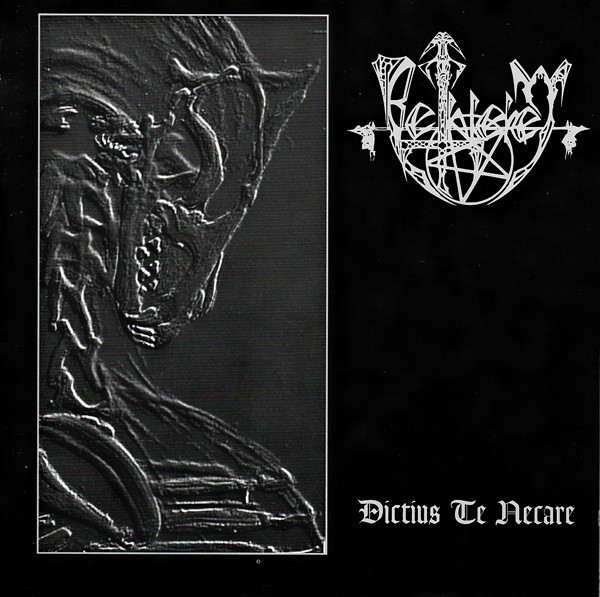
Bethlehem are credited for inventing dark metal, or at least for bringing together black metal with a morose gothic spirit. With major line-up changes effecting each album, their first two albums are most consistent with proliferating the crushing dark metal sound. 1994's Dark Metal and 1996's Dictius Te Necare (Latin: You must/should kill yourself) can be defined by the extremely tortured vocals of Andreas Classen (on the first album) and Rainer Landfermann (on the second): schizophrenic, shredding, croaked, groaned, shrieked, cried and spat - at times goblin-hobbit like, at others a step down from the melancholy of Tom G. Warrior - always sadistic and unstable. A rather unsupported statement follows: Bethlehem paved the way for the glut of depressive black metal bands that emerged out of Europe and Scandinavia in the years to come; if not, they were at least one of the first. Bands like Sweden's Shining (formed in 1996), Silencer (formed in 1995), and Italy's Forgotten Tomb (formed in 1999.)

Bethlehem - Dictius Te Necare
The music - forgetting the vocals - itself is strikingly good. On Dictius Te Necare - my favorite of the first two - the pace varies from a typical first-wave inspired black fury - but a lot meatier than the typical early 90's sound - and sparse and dragging doom sections akin to Candlemass. Sometimes, as in 'Die anarchische Befreiung der Augenzeugenreligion', the guitars reverberate alone and grating vocals and gloomy ambient under-flow; or in 'Aphel - Die schwarze Schlange' as the morose solo bass clangs in the hollows between black-metal riffing and down-tuned slabs. The contrast between loud and quiet, aggressive and melancholy is very well done. The atmosphere they create is also truly oppressive: take the end section of 'Verheißung - Du Krone des Todeskultes', for example, where eerie gothic chanting, blocks of post-punk/goth synth and German spoken-word broods.

All song titles and lyrics on Dictius Te Necare are in German, and that's a more disconcerting and unsettling thing than your typical depressive lyrics written in English; this is where bands like Shining fail, their lyrics and persona's as promoters of suicide and self-harm is a cheap attempt at clutching for something to differentiate them from the crowd, for getting a bit of media attention and morbid curiosity. It's a shame because their music is multiple times more interesting, diverse and unique than their childish extremism. Of course, it's meant to upset, it's meant to cause controversy; it doesn't upset me, it just gives the music a much cheaper feel. 

After writing the last paragraph I've realised it's wrong to pigeon-hole Bethlehem with depressive black-metal. Bethlehem have much more to do with gothic and melancholy doom similar to Anathema, Paradise Lost and Katatonia. The 11 minute epic 'Apocalyptic Dance' from Dark Metal is thick and crushing with interesting riffs, haunting violins and a general harrowing atmosphere that runs throughout the album. Classen's vocals on Dark Metal are slightly more conventional: consistently deeper gutturals and growls, yet they still maintain a raspy black metal evilness. Bethlehem are crushing and maniacal and will satisfy the most corrupted of minds.