Showing posts with label Alphabetical Discovery - Week A. Show all posts

Friday, 12 February 2016

Alphabetical Discovery - Week A, Day Seven: Aquilus

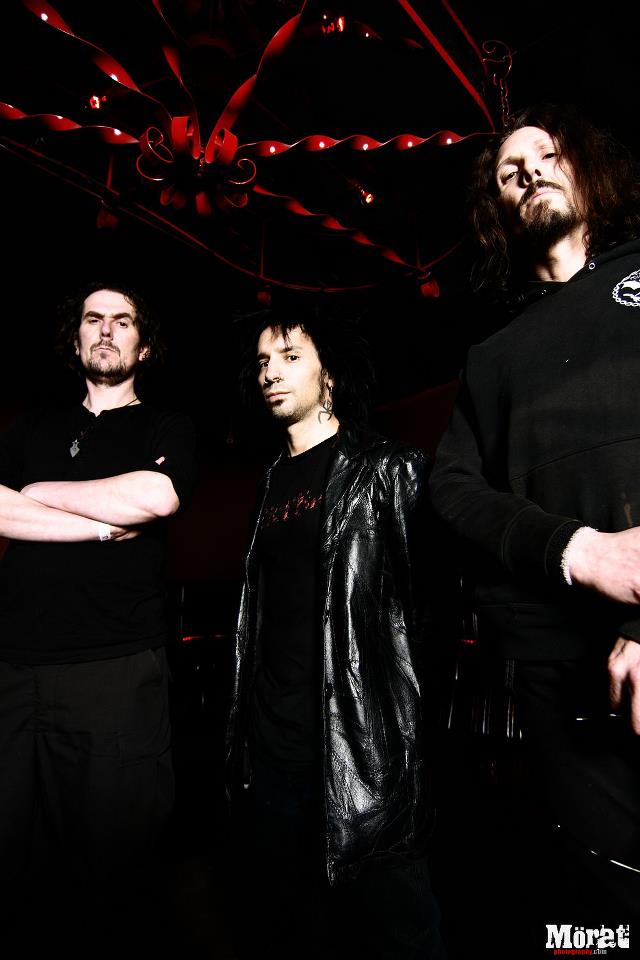
Photography by Mark Hoffmann at Not Flash Photos.
Aquilus is a one-man black-metal project out of Melbourne, Australia and Aquilus's only album - 2011's Grisieus - is incredible. Sensuous, vast and sweeping orchestral melodies - layers of violin, cello ringing, sliding - collide with crunching melodic riffs in the long and varied epic. The melodic progressions are mind-blowing; with all this music reaching us from all corners of the globe a click away, I think sometimes genuine moments of awe are distilled, or lessened, by the excessive amounts of incredible and instantly-accessible music, however there are more than a few awe-inducing moments on Aquilus's Griseus that only occur sparingly in music. 

Aquilus - Griseus
There are many prolonged orchestral passages void of any extremity; light, airy, subtle and fairy-like at times, in my opinion it never gets boring, it's brilliantly constructed, it progresses and moves through various sounds and intensities like an epic film-score (at times it really feels like something cut from the Lord of the Rings soundtrack, it's much less plastic and flat as, I feel, is the case with Summoning.)

Grisius is long: at 1 hour and 19 minutes it really demands a lot of attention, but it's incredibly submersing and nothing ever feels like it's being dragged on for too long, nothing is blown out of proportion. Australia does seem to produce these epic one-man atmospheric projects and Aquilus, it can be said, is the more folky and neoclassical inspired younger brother of the astral, dream-space music of Midnight Odyssey. A less blatant connection would be with Opeth; there are many qualities in Aquilus's music, particuarly when it breaks into black-metal intensity (such as in 'Loss'), of Morningrise-esque melody and riff progression. Songs like 'Loss' erupt towards the end with a haunting aggression. 'Smokefall' opens with searing riffs and deep guttural growls, leaning more towards a melodic-death/doom sound akin to the ethereal soundscapes of early Amorphis or Anathema.

The heavy parts are heavy, but laced with poisonous melody and orchestral sweeps. 'Latent Thistle' is one such example. It's an incredibly ambitious sound: the ambition has paid off. I genuinely think that Griseus is one of the best atmospheric black-metal albums.


Thursday, 11 February 2016

Alphabetical Discovery - Week A, Day Six: Alice In Chains


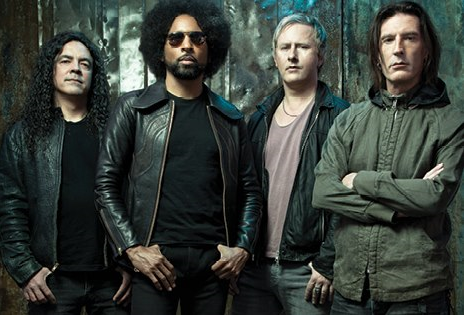
It wouldn't be a controversial comment to say that Alice In Chains are metal. It may be more controversial to say that they are perhaps one of the few bands that are almost universally lauded. I don't know of many people who dislike the band; there are those who are most likely indifferent, or haven't really given them a chance, but across the board they seem to appeal - even their recent albums with 'new' vocalist William DuVall - to a wide array of listeners.

Formed in Seattle, Washington in 1987, the band released three full-lengths in the 90's with the incredible Layne Staley - Facelift (1990), Dirt (1992) and Alice in Chains (1995) - alongside the less aggressive and more vulnerable Jar of Flies EP in 1994. Following the tragic of death of heroin-addict Layne Staley the band disbanded.  Fuzzy, gruff and groovy, they were simultaneously doomy, melancholic and introspective. 'Love Hate Love', for example, from debut album Facelift, is a downcast explosion of slow and crushing doom; it creeps slowly into life as Staley's pained vocals soar and writhe, it has a sort of Saint Vitus feel, and the guitars slither and crawl beneath. Conversely, on the same record, is 'I Know Somethin  (Bout You)', a funky romp of grooves, key changes, bluesy bass exploration, stoner-esque riffs and rich vocal harmonies. 'Head Creeps' from the self-titled is similar: a flangy, acid trip groove seeps beneath deranged spacey vocals.  


There's always an intense aggression and sense of self-directed anger most of their songs, even the more rock based tracks; Staley's and Cantrell's lyrics are full of bitterness, melancholy and general gloom. They're an emotional and vulnerable band, who (cliche) wear their hearts on their sleeves. It's what makes their music appealing; it's down-to-earth and real; as much as we like songs about three-headed dragons battling gold-plated dragon slayers on mountains made of skulls, or songs about the almighty malevolence of Satan, sometimes the most hard-hitting songs are those that are about boring old personal experiences. It's what these 'wrongly pigeon-holed as grunge' bands (Pearl Jam, Nirvana, Soundgarden) do so well, and it's part of the reason they're so popular. When you combine this - in Alice in Chains case - with incredible song-writing, diverse and interesting riffing, and a generally powerful sound, you've on to something special. To go from the desperately sad 'Rotten Apple' to 'Sludge Factory' is why they're such a great band ('Sludge Factory' is, with much deliberation, my favourite AiC song: The monstrously swampy and crunchingly down-tuned guitars layered beneath snaking vocal harmonies, the echoing reverb of the bass that clangs with menace, and the breakdown of the song towards the end is great. The live unplugged version is incredible to: the vocals are pitch perfect.

And there are plenty of riffs stored away in their metal toolbox. 'Them Bones' from Dirt opens with crunchy heaviness that slams the album in to gear from the get go.  'Rooster' is a semi-ballad mixed with wavering Sabbath riffs and fuzz aplenty. 'Junkhead' is a pessimistic and dark, spiraling in to a pit of self-loathing and lyrics about the evils of addiction, Their sound is part Type-O Negative, part Melvins, part Sabbath and part Kyuss, yet Alice in Chains are completely their own band. There are just too many great songs and too many great moments to talk of and here's just not enough time. 

They returned in 2009, with the charismatic vocal powerhouse William DuVall alongside guitarist, songwriter, vocalist and blonde-haired master Jerry Cantrell, with the excellent Black Gives Way to Blue and The Devil Put Dinosaurs Here in 2013. The sound on these albums is, perhaps, even heavier than on their previous recordings. The sound of songs such as 'Stone' and 'Last Of My Kind' is suffocating. The entire tone - credit to the production - is completely monstrous. There are just too many incredible songs and not enough hours in the day to give them to the time they deserve to write of them. Certainly one of the most consistent bands in music today. 


Wednesday, 10 February 2016

Alphabetical Discovery - Week A, Day Five: Asva

Asva - Photo

Formed in California in 2003 by Burning Witch bassist G. Stuart Dahlquist, who also played bass on Goatsnake's 2001 album Flower of Disease and has featured for Sun 0)), Asva play a richly rich, textured. and slow-burning drone-doom with touches of experimentation and exploration throughout. Their music has the epic scope of film soundtrack's: 2009's What You Don't Think Is Frontier would work perfectly, I believe, as the soundtrack to an adaptation of William Faulkner's As I Lay Dying or as the music for some other book-movie adaptation about the desolate, grotesque and gothic southern plains. I hear in their sound the haunting tones of Skepticism drifting through the arid desert partnered with Earth, trudging towards the horizon as waves of psychedelia and orchestra flutter in the air;  in the distance are the silhouettes of mountains under a burning Sun[n 0))]

Earth are an obvious influence, but Asva's music uses a much diverse range of sounds and atmospheres. Asva's first full-length, Futurist's Against The Ocean (2005),is the darkest of their three: a throbbing, unruly mix of slow doom rhythms and electronic sounds. Asva don't neglect the almighty riff from their music: slow and heavy, and on their first album in particular, they flow in to the mix like molten lava, gradual and crackling, with elements of traditional and funeral doom steaming from the fires. That's not to say there aren't any moments of speed and intensity (from the perspective of drone);  at 12.20 of 'A Game In Hell' from What You Don't Think Is Frontier, after twelve minutes of steady thunder, the drums kick in and pick up pace: heavy, galloping hooves and frontier men, wading through prairie grass and past wild-creatures in the new found-land. 

In 2010 vocalist and guitarist Toby Driver,  the creative mastermind behind avant-garde/progressive projects Maudlin Of The Well and Kayo Dot, joined the band for Presences of Absences (2011), their last full-length: an ethereal and spacey record combining soft organ sounds, wispy individual vocals, church-choir harmonies, mournful melodies and the occasional breakdown in to guitar-led heaviness. It's solemn and reflective, with the odd unsettling touch that sets a listener off balance. It's also hauntingly minimalist with Philip Glass-esque textures and Scott Walker-esque sparsity.

Asva are constantly developing  and changing, they defy concrete categorisation; like Earth and Sun o)) - two of the most important, and probably best, of this vague and wide-reaching style - Asva seem always willing to explore and change up their sound, you won't find monotony here.


Tuesday, 9 February 2016

Alphabetical Discovery - Week A, Day Four: Amebix


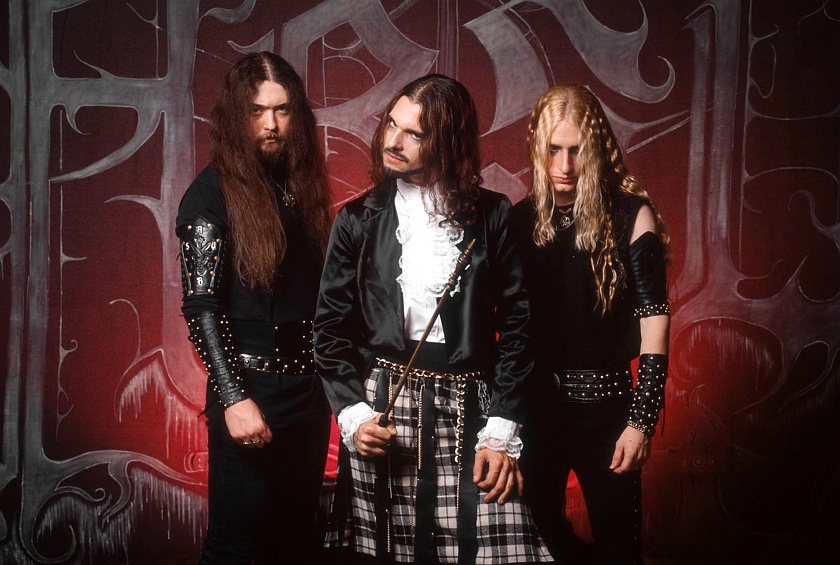
If you merged Lemmy's gravel-throated rock'n'roll, Ozzy's doomy midlands drawl, Tom. G. Warrior's oppressive pessimism and Killing Joke's metallic coldness you'd come close to producing the gravel-throated, anarcho-punk vocalist of Amebix: The Baron Rockin Von Aphid (a.k.a 'Rob Miller'). But 'The Baron' is too eccentric and authentic to flatly compare to others. Vocally, Dave Mustaine must have taken inspiration from The Baron; Mustaine's vocal deliveries, such as those semi-spoken worded croaks - as in 'Sweating Bullets' - is a hallmark of Amebix's unstable sound ('Feel a little numb? Feel a little tired?' The Baron croaks in the 'largactyl', the fourth song on Arise!, a song about former drummer Martin's spiral in to a paranoid schizophrenia in 1981).

Amebix - PhotoThought of as one of the pioneers of the Crust style - dirty, bass heavy. shifting tempos, guttural or grunted vocals, dark and pessimistic lyrics centered on social problems and political disenchantment - Amebix are a huge influence on a diverse range of bands. For Bathory and Darkthrone to credit Amebix  is profound; Darkthrone's more recent output has swayed towards the crust-punk atmospheres that Amebix mastered in the 80's with Arise! (1985) and Monolith (1987). 


Amebix's combination of sounds was staggering; our obsession with labeling was, probably for the better, non-existent in the early-days of extreme metal, but in their music is an eclectic mix-up of anarcho-punk, thrash, sludge, doom, heavy-metal, black-metal, industrial and noise. Praise for the band from Sepultura to Neurosis is an indication of the bands diversity. They were a band ahead of their time who embraced the  spectrum of extreme and dark musical genres, combining their sounds with to great effect.

Amebix returned, 24 years after Monolith, in 2011 with the spellbinding Sonic Mass, a much meatier, textured and industrial record that manages to maintain the darkness and angry energy of the earlier albums. It's staggeringly good and as far as comebacks go it's perhaps one of the best. It reminds me a lot of Cetlic Frost's Monotheist; both bands seem to have mastered the art of the oppressive and disconcerting atmosphere.


Monday, 8 February 2016

Alphabetical Discovery - Week A, Day Three: Absu


Absu - Photo

According to drummer and vocalist Sir Proscriptor McGovern, in an interview with mourningtheancient.com in 2008, there are three particular characteristics that a new 'prospect' (bandmember) must possess:

  1. They must be of Scotch, Irish, or Germanic descent
  2. Grasps a magic(k)al mind
  3. Thinks they can play faster, sufficiently better than King or Hanneman.
These qualties three encapsulate Absu's eccentric and intense music. Formed in Plano, Texas in 1991, 'with all the admiration and adoration for occult/alchemic(k)al sciences and Sumerian mythology', under the watchful eye of maniacal drum magician and vocal goblin Sir Proscriptor McGovern, Absu play a black-thrash at  a beyond break-neck speed. To not talk of Tara (2008) - Absu's fourth full-length and possibly one the greatest black-thrash albums  - would be a travesty. It's a relentlessly furious album that casts it's spellbinding ferocity from the opening drum roll and refuses to let up; the speed of the drums, the amount of memorable riffs and the speed of their progressions is staggering. It's the sound of a band possessed and consumed by ancient and mystical spells, a hyperactive, almost inhuman, group of individuals converting some ancient pagan madness into the extreme metal form. Moments of psychedelia (think The Grateful Dead playing at the speed of light) and jazz fusion (think Bill Cobham bewitched by the Courtly witches west of County Meath) lurk beneath the barrage of shill riffs and octopus-armed drumming. The band fittingly call their music 'Mythological Occult Metal', an eccentric label for an eccentric band. Thematically it's all rather bizarre with its niche choice subject; I've shamefully taken  McGovern's quote from Wikipedia, but it aptly summarises the album's niche concept: 

"The album is presented in a chronicled assembly dividing it into two phases: 'Ioldánach's            Pedagogy' and 'The Cythrául Klan's Scrutiny'. Certain goals and objectives were finally                    accomplished with 'Tara', through exploration of our ancestral attributes and channeling                   divisions of pure magic within our minds and souls"

Also, King Diamond features on the penultimate track of the album, what more could one want? 


Sunday, 7 February 2016

Alphabetical Discovery - Week A, Day Two: Abyssal


Abyssal - Photo

At the abyssal depths, 6000 metres down, a darkness rises and ruptures  into the world. Abyssal is the sound of impending doom, catastrophe; humanities dying cry as it dragged into the abyss, nature apathetic to frail man. Abyssal's sound is a harrowing mix of Leviathan-esque atmosphere cavernous death-metal ferocity. It is music of opposing forces, the heavy silence before disaster and the lingering solitude following. Abyssal's music is brutal and technically diverse but also subtle and vulneralbe. The band's three releases - Denouement (2012), Novit enim Dominus qui sunt eius (2013), and Antikatastaseis (2015) - are vast, diverse and well-structured albums. Antikatastaseis (2015) ('anti-stability', from the greek 'katástasis') - was widely praised for it's atmospheric abnormalities, it's continuation and development of the cryptic, irregular unsettling nature of  bands such as Immolation, Portal, and Ulcerate and for its more melodic - when compared to Abyssal's previous two releases - and progressive musical leanings. Easily some of the best 'atmospheric' (for lack of a better label) death metal bands out there.


Saturday, 6 February 2016

Alphabetical Discovery - Week A, Day One: Akercocke

The idea behind this 'Alphabetical Discovery' shtick is to post a different band every-day, briefly talking about them and why [I think] they're good. It will be a daily thing, and each Saturday it will move on to the next letter of the alphabet. It's mainly about sharing various bands from various genres and maybe throwing in some odd-balls here and there. It's fitting that the first post for the first week (Week A)  is about the band that inspired the naming of Akerblogger: Akercocke. 

Akercocke existed in a world of their own; their mix of eccentric progressiveness (and a rather non-metal sophistication - just look at that suave band photo) with a brutal blackened-death hybrid was rather peculiar, yet it worked incredibly well. Formed in London in 1997, their five full-lengths (Rape of the Bastard Nazarene (1999);The Goat of Mendes (2001); Chronozon (2003); Words That Go Unspoken, Deeds That Go Undone (2005) and Antichrist (2007)) successively grew more grand and ambitious; progressive undertones and borrowings from the vast spectrum of extreme metal littered their later output, but each album, from first to last, maintained an abrasive technicality and a genuine originality. 


Mendonca's harsh vocals were truly maniacal, his cleans perfectly fitting and ritualistic, David Gray's drumming  inhuman, the lyrics unconventional and disturbing, and the scope and scale of the albums captivating; most importantly, in my eyes, was their ability to embrace melody and atmosphere, knowing that when treated with care and precision, it can intensify the abrasiveness sections ten-fold; Akercocke could, at one moment, be subtle and tender and at the next completely intense. Their musicianship is outstanding and it's truly shame they split up. The world needs these extreme-metal oddities. Peter Benjamin (Bass) and David Gray (Drums) went on to form Voices,  a very interesting progressive-black-death hybrid in their own right.